
An electronic medical record (EMR), also called as electronic health record (EHR) is a digital version of a paper chart that contains all of a patient’s medical history from one practice. The terms EHR and EMR have often been used interchangeably, although differences between the models are now being structured and defined. Electronic health record (EHR) is an evolving concept defined as a collection of the electronic health information of individual patients. The EMR is defined as the patient record created by providers for specific encounters in hospitals and ambulatory environments, and which can serve as a data source for an EHR.

Government agencies and insurers are strongly encouraging the adoption of Electronic Medical Records (EMR/EHR), supported by incentives and penalties under the HITECH Act. EMRs help providers improve diagnosis and treatment by replacing paper records, which are often hard to read and prone to errors.
Digital records keep patient information organized, accurate, and easily accessible in one place. They also standardize data, support research and public health tracking, and allow continuous updates—making healthcare more efficient, reliable, and streamlined.
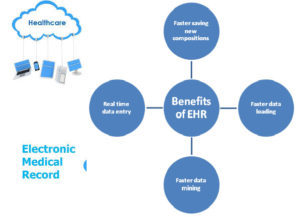
The information stored in EMRs is not easily shared with providers outside of a practice. A patient’s record might even have to be printed out and delivered by mail to specialists and other members of the care team. Most times, electronic medical records help improve the quality of medical care given to patients. There have been cases where many doctors and office-based physicians refuse to get rid of the traditional paper records. Harvard University has conducted an experiment in which they tested how doctors and nurses use electronic medical records to keep their patients’ information up to date. The studies found that electronic medical records were very useful; a doctor or a nurse was able to find a patient’s information fast and easy just by typing their name; even if it was misspelled. In summary, the usage of electronic medical records can vary depending on who the user is and how they are using it.
MedUSA has been providing Revenue Cycle Management services
continuously for 30 years. Our long list of satisfied clients
is a testament to the quality of our billing service.
Our billing clients get real time access to all their financial and
billing information through our portal. Clients can have unlimited
users with varying access based on the roles.